Thursday, March 22, 2012

Advice on public transport in Bratislava.

I wrote about this subject a while back when I first got to Bratislava and started living here. Since that time I've experienced the transport system a lot more and I have some advice about public transport in Bratislava for those who are moving here or those who are just visiting.

I've been in Slovakia for just shy of nine months now and picked up a lot more experience with the public transport system. Hopefully this post will help people get around in the city while you're here.

Let's quickly review the three options for transport within the city:


The buses are much like those you'll find in other cities and they serve many many locations. If you go to Petrzalka, which the area on the south side of the Dunaj/Danube, you'll need to go on a bus of some sort as there are no electric lines running there as of yet. I most frequently ride the number 50 bus to Aupark (a big shopping/business centre) and the number 70 bus. These are both popular routes and you have to be ready for crowded buses in the peak commuting hours. You'll find a mix of bus ages here with some of them (like the articulated bus above) being extremely modern and sporting comfy seats, nicer decor and even TV. Others are a bit older with some lovely seat patterns that look like they're from my childhood, but they are still a comfy form of public transport.


The trams can get really busy too, perhaps because they have the advantage of not getting bogged down in traffic. The tram lines run through a good amount of the city and they coincide with the bus and trolley stops quite well so you can hop from one to another quite easily. The older trams have hard plastic seats that make it uncomfortable to turn around and chat with a friend behind you but the newer ones are nice. I usually stand on the trams though as they have less sitting and more standing room than the buses. I like having this option of non-road based public transport as it gives good flexibility.


I frequently use the trolley buses to get around as they run right past our apartment heading downtown. You need to be careful when on the trolley bus as they are electrically powered. That means that they can accelerate very quickly and without any telltale rumbling noise from the engine. I've nearly slipped over a couple of times when I've not paid attention while waiting at a red light. To be honest, I think the drivers enjoy being able to quickly head off when the lights change. It keeps you on your toes at least. One downside of the trolley buses is that the electric connector poles can slip off the overhead wires from time to time. This will add a couple of minutes to your journey as the driver must don a reflective jacket, go around to the back of the bus and fiddle with the cables there until it's all reconnected. Not a big deal for the tourist but it can be annoying if you're on a tight schedule for work. I studied Environmental Sciences in university and so I really like the electrification of the public transportation in Bratislava. I've seen it in a few other European cities and it's probably the best way to electrify transport.


Autobusova Stanica, the main bus station is a real hub for getting around. Many buses and trolleys stop here, lots of people get on and get off, and you can also catch coaches to other cities from inside. If you need to get to the old city from my area (Ruzinov, a few km east) you can get off at the Autobusova Stanica and walk downtown in about ten minutes. The main buses that I see people taking or catching here are:
- the number 50 to Aupark (a big shopping centre).
- the number 70 to Novy Most (the new bridge, close to the old town)
- trolley number 208. Get off a Kollaro Namieste and you're at one end of Obchodna, a big shopping street.
- trolley number 202. This terminates at Rajska (sounds like rye-ska) and you're then on the eastern edge of the downtown area.

For those of you who plan to stay longer in Bratislava, you can walk upstairs in the Autobusova Stanica, go through the doors ahead of you, then turn left and go through the doors there. You'll find a small office not two metres past the door where you can buy a ticket that you can keep and just top up, much like the Oyster card in London. If your Slovak is not so good, here's a simple phrase to get a three month ticket "Prosim si trojmesačný lístok." Because my job involves travelling to different companies to teach so I get the three month card and then I don't have to worry about not having a ticket or not being able to find a machine.


Now if you don't have a long term pass, these are the machines that you need. It's really important to have a ticket before you get on the bus because there's no buying them on board. Unlike the buses I used to catch in England, the driver is there just to drive the bus. It's your responsibility to have a ticket that is accurately punched and appropriate for the ride. For reference, there are two tickets that I normally recommend for visitors.

- 15 minute ticket. It costs 70 Eurocents. Be very aware of how long your bus journey takes when you use this ticket. You don't want to be caught out by an inspector taking a 16 minute journey and have to pay a fine.
- 60 minute ticket. It costs 90 Eurocents and I always keep a couple as backup in case I lose my card or someone needs a ticket at a stop that doesn't have a machine. I consider it my good deed for the day when it happens.

As a backup, you can also get an SMS ticket if you have a phone that works over here. The instructions can be found on this page. I haven't done this yet and it's a bit pricier but it's a good option to have in case you're out of tickets and need to get on the bus.


Whichever ticket you get, be sure to punch it in one of these machines on the bus/trolley/tram. You just slot the ticket in, it beeps and your ticket is marked. Make a note of the time it was punched if your journey will get you close to the expiration time of the ticket.


WARNING TIME.


A piece of advice. The public transport in Bratislava (mostly) runs on time because you don't have to wait for the driver to sell a ticket to each person. They stop, let people off, let people on and then get on with the driving. This means you can get on the bus without a ticket no problem. Nobody will stop you.

Then again the inspectors may get on the bus with the other passengers and then you have a problem.

Inspectors work in groups and arrange it so that they are among the last to get on the bus. There will be one of them at each door of the bus and they tend to look a bit like bouncers in a nightclub. They don't wear uniforms so you won't know they are there (unless you know a few of them by sight as I do now). About thirty seconds after the bus has left, once everybody has punched their tickets, the inspectors feed in a special ticket that locks out the machines. If your ticket is not marked, you will not be able to mark it. They check printed tickets and also have scanners to check electronic tickets so make sure you have a valid ticket. If you don't have a ticket you'll be fined (50 Euros I think) and they will keep you on the bus if need be. I've seen people miss their stops because they didn't have the cash on them. I presume they go back to the station or perhaps the police come but I don't know for sure.

In my experience you're more likely to be inspected on the more crowded routes. I've been checked about ten times on the number 50 bus but only a couple of times on the trams, perhaps because I ride the latter less frequently. In bad weather I've noticed that the inspectors are more active. I guess people get on the public transport to avoid the rain.

In any case, the advice for public transport in Bratislava is to have a valid ticket with you when getting on board.


The last piece of advice I'll impart for now is to check out the route of the public transport that you're using and make a mental note of which stop you need, and the approximate travel time. Here's an example from the number 50 bus stop at Aupark. In this direction I get off at Autobusova Stanica so I have an eight minute ride. Most of the buses have automated announcing systems that tell you which stop you are at as you arrive and then tell you the name of the upcoming one when you leave. Some of them don't have this.Keep a mental note of the number of stops you've passed compared to how many you need. Usually the stops aren't very far apart but missing the stop where your connection is can be very annoying.

Here's a point of Slovak language that confused me for a while. The word for bus stop is Zastavka. The announcer kept reading this out amongst and it really threw me because I thought it was the name of a particular stop that wasn't on the scheduled route. It was a bit worrying.


To sum up


Getting around Bratislava on public transport is really easy and convenient for the most part. You can mix and match your methods to get to almost any part of the city in very little time. Everything usually runs on time, even in rush hour, the transport options are comfortable and you'll save yourself time vs walking and money vs taking taxis. Key points:

1 - Have a ticket that's valid
2 - Check the stops ahead of time. Know where you're getting off as best you can.
3 - Don't mess with the ticket inspectors. It's not worth it.


For anyone who has read these pieces of advice for using the public transport here in Bratislava and has further questions, please don't hesitate to get in touch and ask in the comments section below. I will do my utmost to help out with any information or answers that I can.

Very best wishes,

Pete


Your key website for checking the actual buses and so on within the city will be this one.You can type in a bus number or stop name in the search button in the top right.

Monday, March 19, 2012

The touch of spring.


I love the moment when you step outside after a long winter and feel the first warmth of spring. There's something in the air...a smell perhaps or just an essence but it's nice. We've come out of the cold of winter and the piles of snow and it's warm here! At the moment it's sitting pretty at 21 degrees C and the sun is shining.

We're in the countryside in my girlfriend's home village and it's easier to see the change of seasons here. The fields and gardens that were covered with ten centimetres or more of snow are now clear. There's no ice left, the first shoots and snowdrops are arriving, and everything is ready to start growing again.

It's easier to see the cycle of life when you're in the countryside. All around the village I can see people starting to get the soil ready for planting. The apple trees in Edina's mothers garden are starting to bud, some neighbours have cobs of corn in big trays outside to dry in the sun and the green is returning to the plants bordering the fields. I'm excited to spend a lot more time outside.


Next time we come down here to the southern part of Slovakia we'll be in the garden working hard. I'm looking forward to it as a nice break from and variety compared to the mostly mental challenge of teaching English.

The garden needs work


Spring is here and has put a smile on my face. I hope you are all enjoying the changing seasons.

Yours truly enjoying the sun and the fields.

Tuesday, February 14, 2012

Letting go of the past


Sometimes it's hard to let go, especially of people.

It's a problem for me particularly. I didn't think I was the kind of person who had the need to maintain contact with friends, but apparently I am. I put energy and effort into keeping in touch with people, particularly those who are abroad and I know that I won't see any time soon. It is reciprocated far less often than I'd like and that upsets me. Perhaps it is some stereotypical English politeness but that people often omit even the courtesy of a modest reply annoys me greatly. I think that an element of it is that I have great respect for those with the courage to simply state that they won't keep in touch. To me it shows a level of regard for the other party beyond that of those who will let a friendship wither away slowly. I am not the kind to do either very often as I'd prefer to put that energy in to maintain what was there and was good before.

In a way I think it's a continuation of what I had as a child. My parents tell me that I used to be a child who was terribly resistant to change. When a toy seemed to be out of favour it had to be moved to the upper shelves, then to the hall shelves, then to the spare room and finally to the attic over the course of weeks or months. If I noticed or protested about this change, the offending toy had to be quickly returned with the assurance that I had simply misplaced it. I grew out of this over time with many things and I think I've largely stopped it with respect to things in my life. In fact my life has become quite minimalist with respect to things and I like that. For anyone interested in culling some of the excess items from your life, I have to suggest moving to a new country on an airline with minimal baggage allowance. You quickly find out what you actually need ;-)

Then again it seems like I'm not so good at letting go of friendships as they change over time. It bothers and upsets me that people let this happen, though I shouldn't be suprised any more. As distance becomes a factor in our lives then things change and only the strongest relationships remain close. It's not something that can be changed and so I've taken this experience as a chance to move onto new things and change this negative aspect in myself. I can't keep holding on to what once was there and expect that it will still be so. Those people who are important to me have stayed in my life and will continue to do so. Those who are not important will fade to occasional contacts and that will be fine too.


I found some nice quotes about letting go.

Don’t cry because it’s over. Smile because it happened. — Dr. Seuss
Doctor Seuss is as observant and succinctly effective as ever. I will keep the happy memories and the good times that have happened.

Celebrate endings – for they precede new beginnings. — Jonathan Lockwood Huie
This one rings with truth through and through. I've been to many places and through different stages of life. One thing that has always been constant is the positive results of change in my life from new beginnings. I've been to new countries, tried new things, faced fears, made mistakes, learned a lot, lost love and gained a love that is far better for me.

Laugh when you can, apologize when you should, and let go of what you can’t change. Life’s too short to be anything… but happy. - Anonymous
I laugh a lot, I've screwed up a few times and apologised, and now I'm learning to let go of the things and people that I can't change.

I'll end on a positive note urging you to make the most of the relationships that are important to you and keeping ties strong among family and close friends. Life is about the wonderful moments you share with others and being happy.

Take care and enjoy life,

Pete :-)

Thursday, February 2, 2012

I'm a bad consumer. I don't want new things...

Hi everyone,

I've been thinking about something a fair bit recently and it struck me fully last night after a discussion with my girlfriend, Edina.

I'm a bad consumer.

By that I don't mean that I'm necessarily unethical or somebody who buys in an irresponsible way. It's quite the opposite in fact; I don't generally buy a lot of things and I don't generally want a lot of things.


Here's the item I discussed with Edina that got me to realise what I am. It's a Lenovo Thinkpad Edge E-325 and is a pretty neat laptop with good features (13.3" screen, AMD Fusion processor, great keyboard etc.). I work at Lenovo teaching English and a friend there let me know about a deal that is coming up which would give me a good saving on this laptop.

Initially I was jumping at the idea as I have been thinking about getting a replacement for my old Dell laptop for a couple of months now. It slipped off the coffee table a few months ago and the wifi card stopped working, a factor which accompanies missing keys, green lines on the screen and no battery.

The deal showed up and I nearly jumped at the chance but then I thought about it. A question hit me. Why do I need a new laptop? I'd been thinking for so long that once my old laptop kicked the bucket I'd get a get new one and that was that but when I asked myself why, there weren't so many good answers.

Now I will point out that I make a lot of use of the internet for work and communication with family, but I can generally use my school's PCs or Edina's laptop at home. What would a new, shiny laptop bring me except perhaps some slightly snappier performance or the ability to play some newer games? The latter tempted me for a bit, before I realised how little time I have these days to indulge in video games. Why then should I spend money on something that I really don't need, but only want?


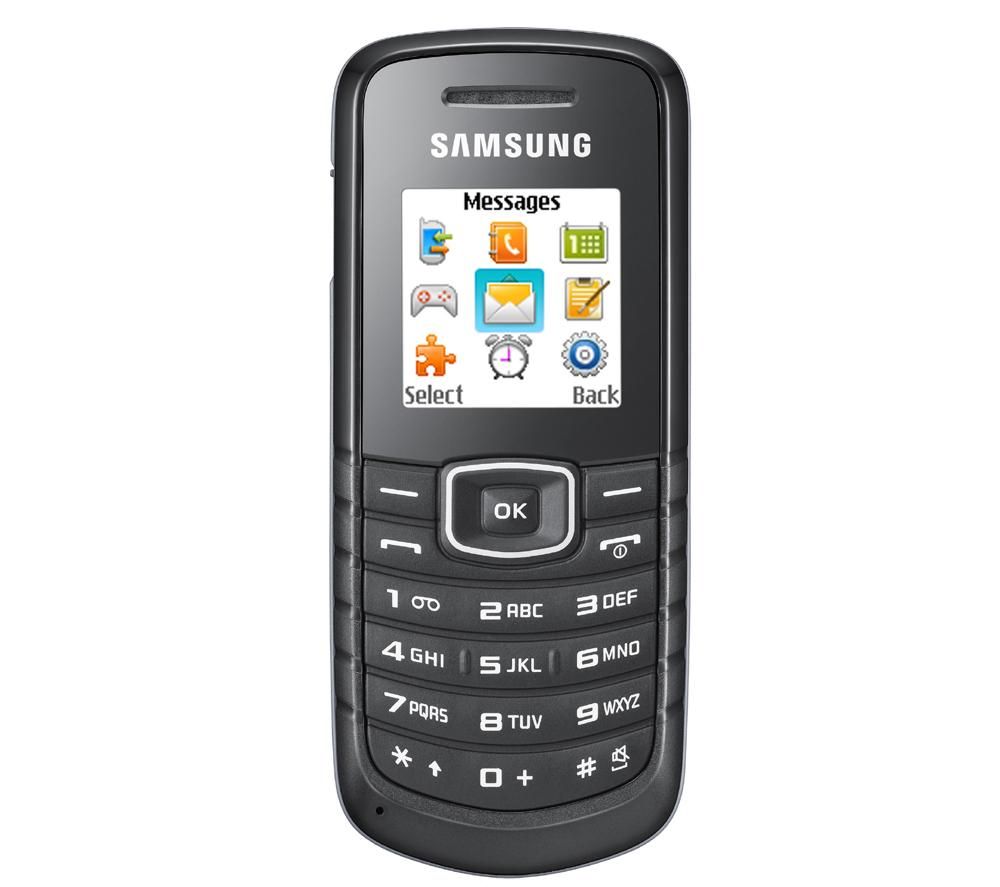
Phones are another thing that struck me as I considered my disinterest in much of modern consumer society. I'm a geek when it comes to new technology with respect to interest in it, but I simply can't justify any kind of need for me to spend on any kind of fancy phone. Edina recently bought the little Samsung phone above for the princely sum of 9.90 Euros. It's nothing fancy but it does the job. My phone (a Nokia something or other) was comparatively pricey at 25 Euros but again, it does what I need.

Now compared to something like the recently released Samsung Galaxy Nexus, the phones we are both rocking are dinosaurs. I love the look and idea of the Nexus but as I thought more about it, I wondered what I would really do with such a phone. Okay, texting and calling are nothing new so this phone would give me access to the internet, email, a camera and the numerous applications.

Perhaps it's a symptom of the relatively simple life that I live as an EFL teacher, but I just don't see what this will bring into my life. I don't get a huge number of emails to deal with daily, facebook doesn't run my life, I have a camera that handles the relatively few pictures I choose to take and I don't have any real need for GPS or map applications.

I should interject here to say that I'm not against buying things per se and that I don't think people who buy such tools or other trappings of modern life are bad. It's more that I find the advertising and desire for so many things that set other people's excitement buttons going don't do it for me. In a similar way I don't want to buy many clothes or have a fancy car. I'm a much more practical and simple person in many aspects of my life, though not all of course.

Instead I decided to save the few hundred Euros/pounds that a new laptop would set me back and use them to help repay my student loan. It's about time I got on with that and it will be good to remove its looming presence. When the time comes that I want to apply for a mortgage and look at investing in property, the last thing I need is to have problems because of an existing loan.


I guess my final thought would be that I feel like people should really consider why they want various things in their life and whether it is something that is really necessary for the way you live. Far be it from me to tell you what to do or not to do but make sure you spend your money and time on things that really matter to you.

Pete

Tuesday, January 17, 2012

A weekend of Hungarian Slovak hospitality.

Following on from my last post about meeting really nice people, I feel like sharing a few words about my weekend in southern Slovakia with my girlfriend's family.

On Saturday we spend the day with her mother in the morning, catching up, chatting in Hungarian (or trying to, in my case), and eating home-cooked food. The latter was a recurring theme from the weekend, much to my delight.

Later on we went to her aunt's house as they wanted to be introduced to me finally. We've been meaning to spend time with the family for a while but time always runs short when we visit or schedules do not work out. I met Edina's aunt, uncle, cousin, the cousin's boyfriend and another cousin's daughter. I was welcomed with open arms by all of them except for the daughter, who is an adorable but shy four year old.

While there I was treated to many home-made culinary delights including red wine punch, red wine, Chardonnay (her uncle owns a vinyard I think), wild deer goulash and pancakes served with apricot jam from the summer harvest. I said (in Hungarian) that I wasn't very hungry and was then informed that this was not an acceptable sentence in the household :-)

We talked for hours about life, me, them, why I came to Slovakia (a favourite question), Hungarians living in Slovkia and more. We've been invited back when we're next at home and also invited to Budapest, where we'll get a tour of all the sights courtesy of Edina's cousin.

This image is not mine but it's a nice one. I took it from Danielle Harms' blog, which you can find here.


One nice thing was that I was complimented on my very limited Hungarian and apparently I don't have a noticeable accent when speaking the phrases I know. I got another lesson in Slovak and Hungarian on the train ride home so here's hoping that I can continue to speak well in these two complex languages. I have a funny love and hate relationship with each of them as they will alternate with making sense and confusing me. Sometimes I want to scream at Slovak as it seems so complex where Hungarian is so logical, but then you change the language point and the roles are reversed. Good times :-D

Afterwards we went to another cousin's house to meet his family and also talk about teaching. He and his wife are teachers and he's been asked to teach some English so we spent a happy few hours swapping ideas and telling stories of what we get up to at work.

Well, I should be clear and say that's what Edina, her cousin and his wife did. I was, by popular child's vote, elected to babysit and play with the two kids: a boisterous three year old boy and the previously mentioned shy four year old girl who had, by now, dropped any pretence of being shy or quiet. It was great fun playing games with them and trying to communicate in my limited Slovak and Hungarian. The highlight was the girl rolling her eyes at me and trying to simplify her instructions even more when telling me that it was my time to count and search for them in Hide & Seek.

In return I was fed with some bread & butter with toppings, paprika paste (from Hungary of course), home-made blueberry jam, a type of roasted bacon and more drink, this time high quality cognac and home-distilled Slivovice. The latter caught me off guard as it's much stronger than the stuff you usually buy in shops. All good news though.

To round off a wonderful day we walked home through a lightly snow-dusted village with a spectacular starry sky above us. I felt very happy and in love.


This is a personalised and touching example of what I've experienced from people since coming to Slovakia, and indeed throughout my world travels. Everyone must find their own way to go through life but I highly reccomend that you take a chance on life at least once and experience a new country with an open heart and mind.

I think you'll be pleasantly surprised by what you find :-)

Friday, January 13, 2012

The people you meet...

The below was written on Thursday January 12th but I didn't have time to finish and post it until now :-)

I'm feeling quite bright at happy today. The sun is shining, the sky is blue and I'm relaxing in a classroom on the eighth floor that has a view over the city and to the hills of Austria. The golden spire of St Martin's cathedral is shining, Bratislava castle is capping the hill it stands upon with its bright, white walls and the forest in the distance on Kamzik is beckoning me. How I do love the sun in January.


It's times like these that I'm compelled to reflect upon the perks and joys of my new profession. While EFL teaching isn't likely to leave you rolling in money by any stretch of the imagination, the experiences of new places and people that you get are quite wonderful. I write this having recently finished testing and speaking to a new student. She was interesting, friendly and spoke good English. As part of her exam, she quizzed me on my opinions about the Eurozone, British culture, British food and then we discussed different experiences in life.

The range of people that I teach and have regular contact with is quite extensive and surprises me at times. From the top of my head I can think of the following jobs my students have: a petroleum company manager, an architect, the head of some radio and TV stations, technical IT specialists, fibre-optic cable designers, students, a bank employee, a teacher specialising in Autism and special needs children, and many more.

Inevitably, when talking to one another we use our own lives as source material for discussion. I've been exposed to so many different stories and backgrounds. Of particular interest to me are the tales from people who lived a portion, or a lot, of their lives under the Communist regime. These stories, and those of the transition out of Communism in 1989, are a fascinating glimpse into what was such an abstract piece of history to me. Several of my students were at university during those years and they speak fondly of it in a number of ways, though they admit that the country is better off now. I get challenged daily by different viewpoints and cultural backgrounds. I bring out discussion questions for my higher-level students and they often force me to defend my own position that comes from a different background and life experience.

It makes me very glad to have taken the step forward in life and to find something that really works for me. I love seeing new countries, experiencing new cultures and meeting people whose life stories enrich my knowledge of the world.

There is the story of this teacher and just a few of the people I get to meet.

All the best,

Pete

Monday, January 2, 2012

The most common mistake English people make...but is it a mistake?


Hi everyone and Happy 2012.

I'm feeling nicely refreshed after a Christmas and New Year trip home to England. It was great to see family, enjoy the mild English winter and generally relax with plenty of food and drink. There's three great things about being home and taking a guest with you: showing off the beauty of your home area, introducing them to your friends and family, and being reminded of all of the great things about where you live by somebody who sees them with fresh eyes.

While there, though, I did notice a mistake that I hear with reasonable frequency from those who have English as their mother tongue. I've heard it from my parents, friends, colleagues and almost everyone who speaks English. I even find myself doing it from time to time, though I try not to now that I'm aware of it. I made the mistake in question deliberately in the paragraph before this one. Can you find it?
...
...
...
...
...
...
...
The answer is: There's three things...

Now people say this, or variants of it, quite frequently in conversation. I noticed it numerous times during my holiday in England but I've also heard it from people in all walks of life (up to and including the US President).

It's a funny one because I don't know of anyone who would use the non-contracted form, there is, with a plural, but once we shorten it to there's it is common and fairly natural for people to use it with singular objects or plurals.

I challenge you to listen carefully to English speakers and I suspect that you'll come across this error with reasonable frequency.


It does however bring up the question of what constitutes a mistake in a language. English is evolving as, I imagine, are most other spoken languages and therein lies the defence to this mistake I've picked up on.

If most people use it in their day to day conversations in English, then should it be considered a mistake any more? We've discarded and altered many aspects of English that were common just a century ago. I suggest you go out and read some classic literature to find examples of sentences and phrasings that would be extremely unusual to hear in normal conversation these days.

So what are your thoughts on this mistake and whether it should in fact be considered a mistake at all?


? - There's too many factors in any language to form distinct rules about what's correct.

? - There're too few people paying attention to what they're saying and so everyone should focus more on the language they use.